

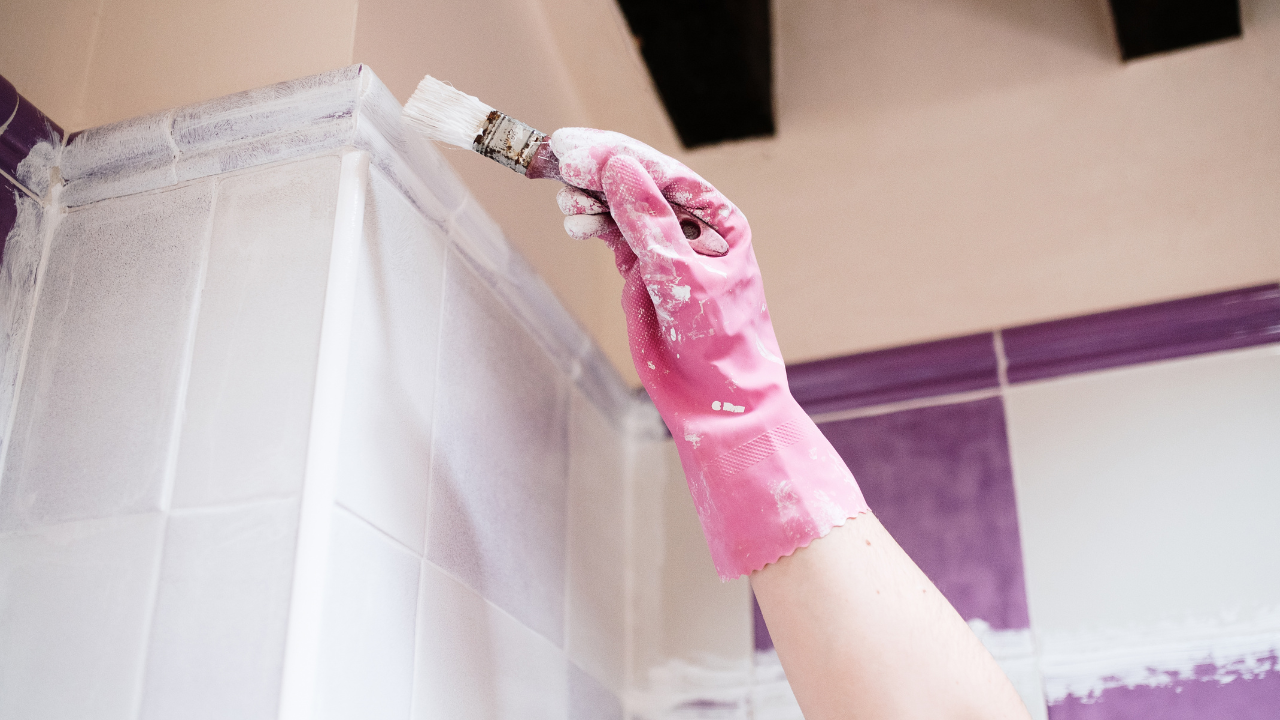
Bathroom paint fails more often than paint in any other room in the house - and almost always for the same reasons. Peeling near the shower. Mould appearing in corners. A finish that started bubbling within a year. In most cases these aren't product defects. They're the result of using the wrong type of paint for the environment, or the right paint applied without the right primer on surfaces that were never properly prepared.
Bathrooms are genuinely demanding spaces for paint. The daily cycle of steam, condensation, temperature swings, and cleaning product exposure adds up quickly, and what holds up fine in a bedroom or hallway won't survive a year in a poorly ventilated bathroom. Getting it right starts with understanding what separates bathroom paint from standard interior paint, and which finish, primer, and colour choices actually hold up over time.
The Pro Works interior painting services page covers what a professional bathroom repaint involves, from surface preparation through to product selection.

The challenge isn't moisture on its own - it's the repeated cycle of it. Every shower deposits steam onto the walls, ceiling, and trim. That moisture sits there while the room returns to ambient temperature. Then the cycle happens again the next morning. Over weeks and months, standard interior paint - which isn't formulated to handle this - begins to soften, lose adhesion, and eventually blister, peel, and allow mould to grow underneath.
Flat and matte finishes are particularly vulnerable. They're porous enough to absorb moisture rather than shedding it, which creates exactly the damp surface conditions that mould thrives in. Many bathroom paint failures come down to a well-intentioned coat of standard matte paint applied to inadequately primed walls - and the result rarely lasts more than a season before problems appear.
The fix is product-specific: bathroom paint is a distinct category formulated with moisture resistance, mould inhibitors, and a film that is harder and less porous than standard interior paint.
The best paint for bathroom use is a 100% acrylic latex formulated specifically for high-humidity environments. The difference between this and standard interior paint comes down to three things.
Moisture resistance. Bathroom-specific paint forms a harder, less permeable film than standard paint. Where standard acrylic absorbs ambient humidity over time, a moisture-resistant bathroom paint sheds it - which is what allows it to hold up through years of daily steam exposure.
Mould and mildew inhibitors. Quality bathroom paints contain antimicrobial agents that actively resist mould and mildew growth on the paint film. This doesn't mean mould can't grow - if there's an underlying moisture problem, mould will find a way - but it significantly reduces the risk in normal bathroom conditions and means the paint surface itself doesn't become a hospitable environment.
Durability and cleanability. Bathrooms get cleaned with products that would strip a standard paint finish over time. Bathroom paints are formulated to resist the repeated contact with cleaning agents, soaps, and moisture splashes that a bathroom wall experiences regularly.
Paint finish - the level of sheen - matters more in a bathroom than in almost any other room, because sheen level directly affects how well the surface sheds moisture and how easy it is to clean.
Satin is the most widely recommended finish for bathroom walls. It has a soft, subtle sheen that repels moisture, wipes down cleanly without looking overly reflective, and sits in comfortable territory between flat and glossy. It's durable enough for regular cleaning without the high-shine look that some people find too bright or reflective in a bathroom. For most residential bathrooms, satin is the practical choice for walls.
Semi-gloss is the standard for higher-moisture bathrooms, particularly those with limited ventilation, and for trim, doors, window frames, and vanity cabinets throughout. The slightly higher sheen makes it even more resistant to moisture and even easier to clean, and on trim and cabinetry it produces a clean, crisp result that suits most bathroom styles. The trade-off is that it shows surface imperfections more clearly than satin, so prep work matters more.
High-gloss is excellent for trim and cabinets where you want maximum durability and the cleanest possible finish, but it's more reflective than most people want on full bathroom walls. It's worth considering for small bathrooms where easy cleaning is the priority over everything else.
Flat and matte finishes are generally not recommended for bathroom walls. They absorb moisture rather than shedding it and are difficult to clean without damaging the finish. The exception is a small number of premium bathroom-specific formulations - Benjamin Moore Aura Bath and Spa being the best known - that are engineered to deliver a matte appearance with genuine moisture resistance. These exist, they work, and they're worth knowing about if you specifically want a flat finish in a bathroom, but they carry a significant price premium over standard bathroom paint.

The most common reason a bathroom paint job fails isn't the paint. It's what goes - or doesn't go - underneath it.
Skipping primer in a bathroom, or using a standard interior primer rather than one formulated for moisture resistance, is one of the most reliable ways to end up with peeling paint and mould behind it. A moisture-resistant or mould-resistant primer does two things a topcoat alone can't: it seals the surface so the paint has something stable and non-porous to bond to, and it adds a layer of mould inhibition between the wall and the paint film.
For new drywall in a bathroom, primer is non-negotiable. Drywall is highly porous and will absorb bathroom paint unevenly without it, creating the conditions for adhesion failure. For walls that have a history of mould - even if you've cleaned it thoroughly before repainting - a dedicated mould-killing primer should be applied before any topcoat goes on. Painting over previously mouldy walls without this step is one of the most common reasons mould returns through fresh paint within months.
For more on identifying and dealing with mould before repainting, the Pro Works guide to removing mould from painted walls covers the process in detail.
Choosing the right bathroom paint colors is both a practical and aesthetic decision. The environment imposes some practical constraints - very dark colours in a poorly lit bathroom can feel oppressive, and very light colours in a bathroom with inadequate ventilation will show any water marks or soap residue more readily - but within those constraints there's significant range.
Light blues and greens are the most popular bathroom paint colors for good reason. They reinforce the spa-like, clean quality most people want from a bathroom and work with white fixtures and natural materials without requiring much coordination. Soft sage, duck egg, seafoam, and pale aqua all perform well across different bathroom sizes and light conditions.
Warm neutrals - greige, warm white, and soft cream - are reliable choices that keep a bathroom feeling bright and open without the coldness of stark white. Warm-toned whites with a yellow or pink undertone tend to look better than blue-toned whites under bathroom lighting, which is often warm and artificial.
Deep, moody colours have become increasingly popular in bathrooms over recent years. Deep navy, charcoal, forest green, and dark teal can transform a bathroom from a purely functional space into something genuinely atmospheric, particularly when paired with brass or matte black fixtures. These work better in bathrooms with good natural light or well-designed artificial lighting. In a dark, small bathroom with limited ventilation, they can feel heavy.
White works well in bathrooms - but choosing the right white matters. Stark, cool whites can feel clinical and unforgiving under bathroom lighting. A warm off-white or a soft white with a slight grey or cream undertone tends to read better in practice, particularly with wood vanities and warm metal finishes.
Whatever colour direction you choose, test a sample in the actual bathroom and check it at different times of day and under the bathroom's artificial lighting before committing. Bathroom lighting is often warmer and more directional than other rooms, and colours can read quite differently than they do in natural light.

Bathroom ceilings need as much attention as the walls, and often more. Steam rises, which means the ceiling is the most consistently damp surface in the room. Many bathroom mould problems originate at the ceiling - particularly in corners and around exhaust fans - because that's where moisture accumulates most.
Use a moisture-resistant paint on the ceiling, not standard ceiling paint. Many painters use the same bathroom paint on the ceiling as on the walls, which is a sound approach. If you prefer a distinct ceiling colour, a bathroom-specific ceiling paint with mould resistance is a better choice than a standard flat white ceiling product.
Ceiling finish is one of the few places in a bathroom where a flat finish can be justified - if you use a bathroom-specific product formulated for it rather than a standard flat ceiling paint. The ceiling sees less direct contact than walls, so cleanability is a lower priority, and a flatter finish reduces any unwanted reflectivity from overhead lighting.
The same principles that govern bathroom paint apply to any room in the house where humidity and moisture are regular features.
Laundry rooms produce steam and humidity from washing machines and dryers and need moisture-resistant paint on the same basis as a bathroom. They also tend to get less ventilation than bathrooms, which makes mould inhibitors in both primer and topcoat even more important.
Mudrooms and utility spaces that experience wet coats, boots, and outdoor gear coming in regularly need a durable, cleanable finish. Satin or semi-gloss in a moisture-resistant product suits these spaces well.
Kitchens see regular steam, grease, and cleaning product contact that standard paint doesn't handle well over time. The same moisture-resistant acrylic in satin or semi-gloss that works in a bathroom is a sound choice for kitchen walls, particularly near the stove and sink.
In all of these spaces, the same prep discipline applies: clean the surface thoroughly, use a moisture-resistant primer, and don't rush application or drying time between coats.
The difference between bathroom paint that lasts five years and paint that starts failing in the first season is almost entirely in the product choice and the preparation - the primer, the surface condition before painting, and the finish selected. None of these decisions are complicated once you know what to look for.
If you'd rather have the assessment and the job done by someone who knows what a bathroom wall needs before any paint is opened, the Pro Works team is happy to help. Get in touch for a free quote and let's take a look at your space.
What is the best paint for a bathroom?
A 100% acrylic latex paint specifically formulated for bathrooms and high-humidity environments is the best choice. These products are built with moisture resistance and mould and mildew inhibitors that standard interior paint lacks. Paired with a moisture-resistant primer and a satin or semi-gloss finish, they significantly outlast standard paint in bathroom conditions.
What paint finish is best for bathroom walls?
Satin is the most practical choice for most bathroom walls - it repels moisture, cleans well, and doesn't look overly reflective. Semi-gloss is the better choice for bathrooms with high humidity or limited ventilation, and is the standard for trim, doors, and vanity cabinets throughout. Flat finishes are generally not recommended unless you're using a premium bathroom-specific formulation like Benjamin Moore Aura Bath and Spa.
Do I need to prime bathroom walls before painting?
Yes. A moisture-resistant or mould-resistant primer is an important step in any bathroom repaint. It seals the surface, improves adhesion, and adds a layer of mould protection between the wall and the paint. For walls with any history of mould, a dedicated mould-killing primer should be used before the topcoat regardless of whether the mould has been cleaned.
What bathroom paint colors make a small bathroom feel bigger?
Light, warm-toned colours tend to make small bathrooms feel more open - soft whites, warm creams, pale blue-greens, and light sage are all reliable choices. Using the same colour on walls and ceiling removes a visual border that can make a room feel lower, which helps in compact bathrooms. For more on using paint to open up tight spaces, the Pro Works guide to brightening a dark room covers light and colour principles that apply to bathrooms as well.
How long does bathroom paint last?
A properly prepared and painted bathroom using a quality moisture-resistant product can last seven to ten years or more before needing repainting. Poor surface preparation, the wrong primer, or a standard interior paint used in place of bathroom-specific paint will typically fail within one to three years - most commonly showing as peeling near the shower or mould appearing in corners.
Can I use the same paint in the bathroom as the rest of the house?
Standard interior paint is not formulated for the humidity and steam cycles of a bathroom. It can look fine initially but tends to peel, blister, and allow mould growth much sooner than a bathroom-specific product. Using bathroom paint in the bathroom and standard interior paint in lower-humidity rooms is the right approach - they're different products for different environments.