


That yellow-brown ring on your ceiling is hard to ignore. Whether it appeared after a heavy rainstorm, a plumbing drip from the floor above, or a bathroom leak that's since been repaired, a water stain on the ceiling can leave your home looking tired and neglected - even if everything else is in great shape.
The good news is that a water stain on the ceiling is fixable. The not-so-good news is that there's a right way and a wrong way to go about it. Skipping steps or reaching straight for the paint roller is one of the most common mistakes homeowners make - and it almost always means the stain comes right back.
This guide walks you through what causes ceiling water stains, how to address them properly, and when it makes sense to call in a professional. If you'd like to learn more about what a professional interior paint job involves, the interior painting services page is a good place to start.
.png)
Before anything else, it's worth understanding what caused the stain. A water stain on the ceiling is rarely just a cosmetic issue - it's a symptom of moisture getting somewhere it shouldn't be.
Common causes include:
Identifying the source matters because if you paint over a water stain without fixing the underlying problem, the stain will return. In some cases, an ongoing leak can also lead to mould growth or structural damage - both of which are far more costly to deal with than a simple repaint.
If you're not sure what caused the stain or the source hasn't been fixed yet, that's the first call to make - to a plumber or roofing contractor - before any painting begins.
This cannot be overstated. Painting a water stain on the ceiling before the leak is resolved is a temporary fix at best. The moisture will continue to work through the surface, and the stain will reappear - often darker and more spread out than before.
Once the source has been identified and repaired, give the ceiling adequate time to dry completely. Depending on the severity of the water damage, this could take anywhere from a few days to a couple of weeks. Painting over a ceiling that's still damp will cause the new paint to peel, bubble, or fail to adhere properly.
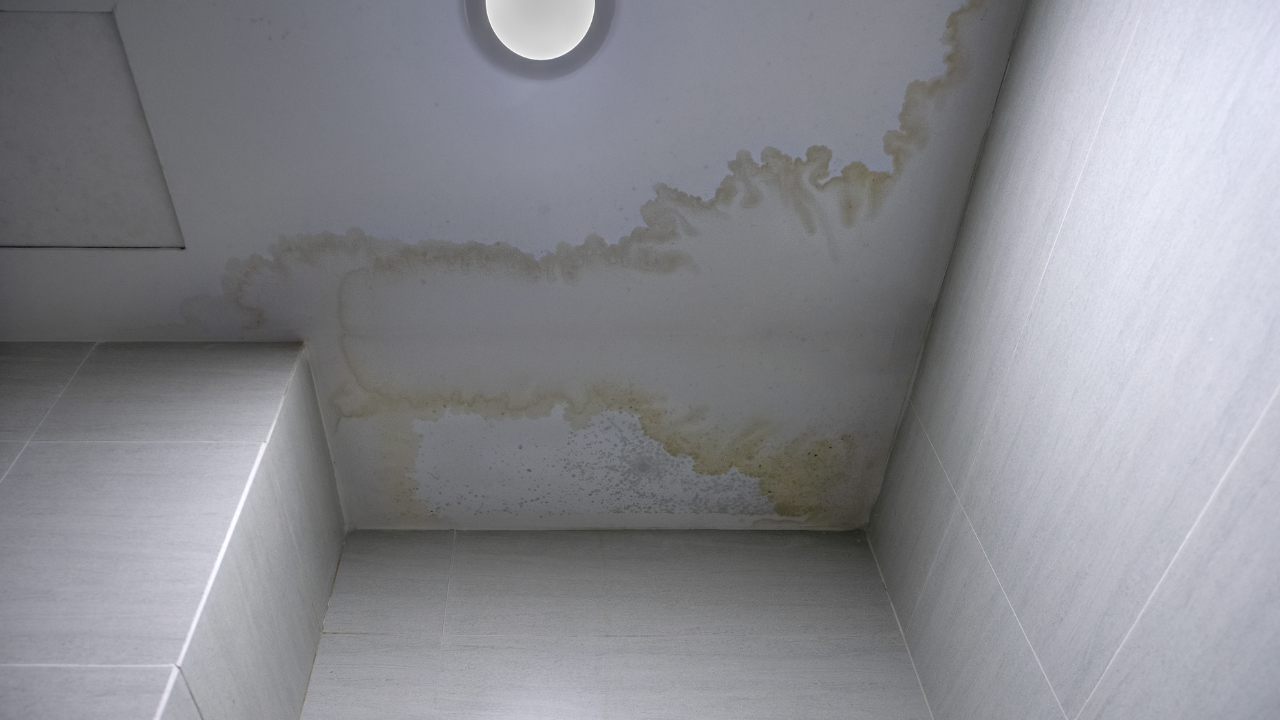
With the source fixed and the ceiling dry, take a close look at the affected area. Ask yourself:
Is the drywall soft, sagging, or crumbling? If so, the damaged section may need to be cut out and replaced before any painting can happen. Painting over compromised drywall won't restore its integrity.
Is there any sign of mould? Mould often appears alongside water damage, particularly in humid rooms like bathrooms and kitchens. If you see dark spots or smell a musty odour, the mould needs to be treated before you proceed.
Is the paint peeling or bubbling around the stain? Loose or flaking paint needs to be scraped away and the surface lightly sanded smooth before priming.
For small, isolated stains on otherwise solid drywall, the repair process is fairly straightforward. For larger areas or recurring stains, it's worth getting a professional assessment to make sure nothing more serious is going on beneath the surface.
Once the ceiling is dry and structurally sound, clean the stained area before applying any primer or paint. A diluted bleach solution - roughly one part bleach to three parts water - can help sanitize the surface and reduce the chance of mould developing underneath the new paint layer.
Apply the solution carefully with a cloth or sponge, let it sit briefly, then allow the area to dry fully before moving on.
This is the step that most DIY attempts skip - and it's exactly why so many repainted ceiling stains bleed straight back through.
Standard wall or ceiling paint is water-based, which means it won't seal a water stain effectively. The stain absorbs into the new paint layer and continues to show through, no matter how many coats you apply.
The right product for the job is a stain-blocking primer - ideally oil-based or shellac-based - applied directly over the stained area before any topcoat goes on. This creates a barrier that prevents the stain from bleeding through. According to Bob Vila, the best option is an oil-based, mould-resistant, stain-blocking primer in a colour that closely matches the existing ceiling.
Apply the primer evenly over the stained area and allow it to cure fully before painting. This step alone makes the difference between a fix that lasts and one that doesn't.
With the stain-blocking primer dry and cured, the ceiling is ready for its topcoat. A few things to keep in mind:
Use a flat or matte finish ceiling paint. Flat finishes are far more forgiving on ceilings - they minimize the appearance of surface imperfections and blend more easily than satin or semi-gloss.
Feather the edges of the painted area carefully to blend it into the surrounding ceiling. Painting just the stained patch can leave a visible difference in sheen or tone if the rest of the ceiling is older or slightly faded.
In some cases, painting the entire ceiling rather than just the affected area gives the cleanest, most seamless result - particularly if the existing ceiling paint is several years old.
For more on how ceiling paint differs from wall paint and why the right product matters, this Pro Works blog post on ceiling paint vs wall paint covers it well.
.png)
Small, one-off water stains that have been properly dried out and are on solid drywall are manageable for a capable DIYer with the right materials. But there are situations where calling a professional painter - or a contractor - is the smarter move.
Consider getting professional help if:
A professional painter will have access to the right products, the experience to match your existing ceiling finish, and the eye to blend the repair so it doesn't stand out. They can also flag anything that looks like it warrants further investigation before the paint goes on.
You can take a look at how Pro Works approaches interior projects to get a sense of what a professional process looks like from start to finish.
A water stain on the ceiling doesn't have to be a source of ongoing frustration. With the right approach - fixing the source, letting things dry, prepping properly, and using the right primer - it's a very solvable problem.
What makes the difference is not skipping steps. Whether you're tackling it yourself or bringing in a professional, the prep work is what determines whether the fix holds or whether you're back to square one in a few months.
If you'd like a professional set of eyes on a water stain on your ceiling - or if you're ready to have it dealt with properly - the Pro Works team is happy to take a look. Get in touch for a free quote and we'll help you figure out the best path forward.
What causes a water stain on a ceiling?
Water stains are caused by moisture reaching the ceiling from above - most commonly through a leaking roof, a plumbing leak from an upper floor, condensation from poor attic ventilation, or an overflowing fixture. The stain itself is the mineral and debris residue left behind as the water evaporates.
Can I just paint over a water stain on the ceiling?
Not with regular paint. Standard water-based ceiling paint won't seal a water stain - the discolouration will bleed straight through regardless of how many coats you apply. You need a stain-blocking primer applied first, and the source of the moisture must be fixed before any painting begins.
How do I know if my ceiling water stain is a sign of something serious?
If the drywall around the stain feels soft or spongy, if the ceiling is sagging, or if you notice a musty odour or visible dark spots suggesting mould, those are signs the damage may be more significant than a surface stain. In those cases, it's worth getting a professional to assess before you repaint.
How long should I wait before painting over a water stain?
Once the source of the moisture has been fixed, the ceiling should be completely dry before any primer or paint goes on. This can take anywhere from a few days to two weeks depending on the extent of the damage. Painting over a damp ceiling will cause the new coat to peel or fail.
Is it worth repainting just the stained area or the whole ceiling?
For small, fresh stains, spot-priming and painting the affected area can work well. For older ceilings or larger stains, painting the entire ceiling tends to give a more seamless, uniform result - especially if the existing paint has aged and the sheen or tone has shifted slightly.